
Secrets of the Universe: Scenes from the Journey Home

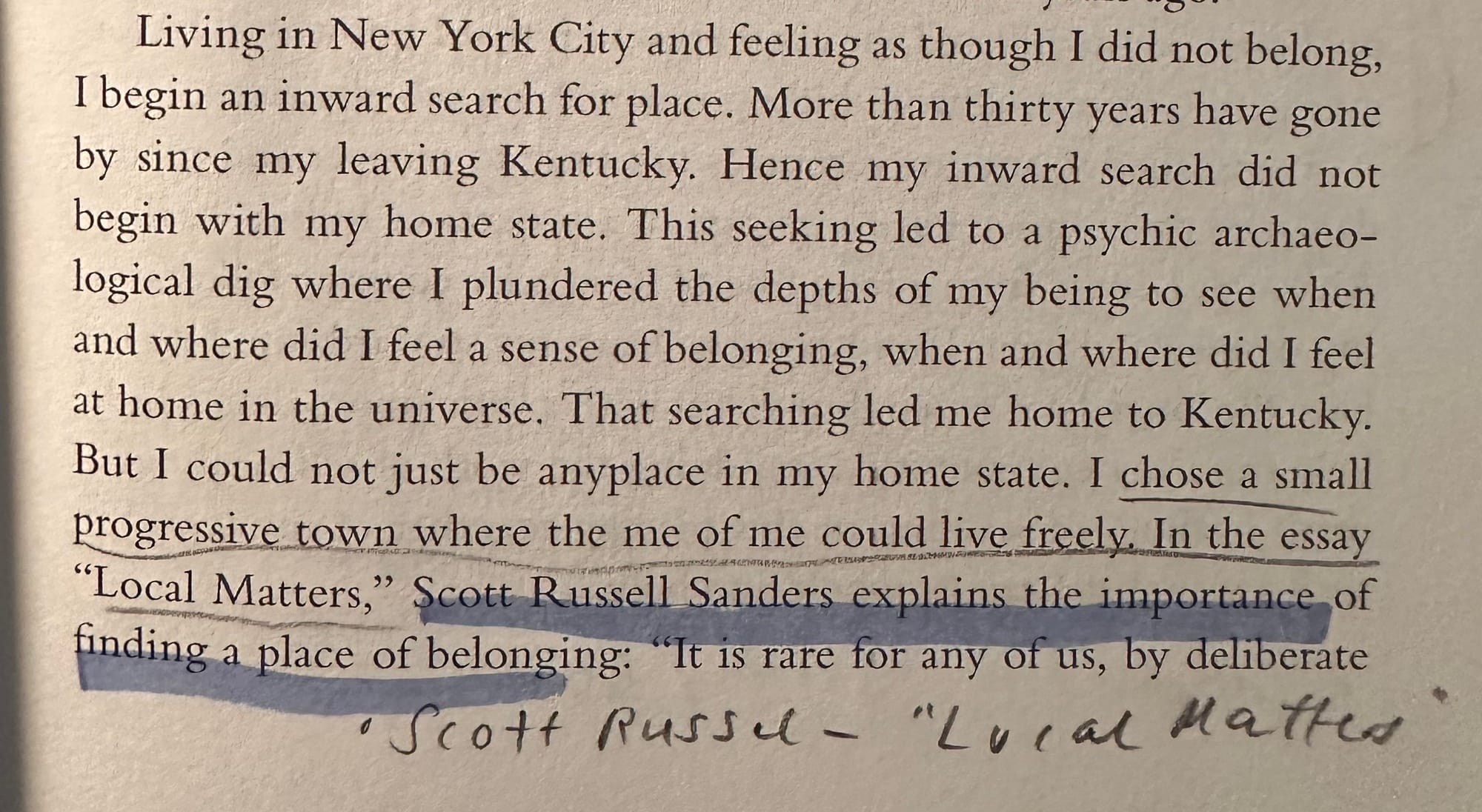
I sought out this book after reading a reference to an essay in it, "Local Matters", in another one of my mother texts, belonging: a culture of place by bell hooks:
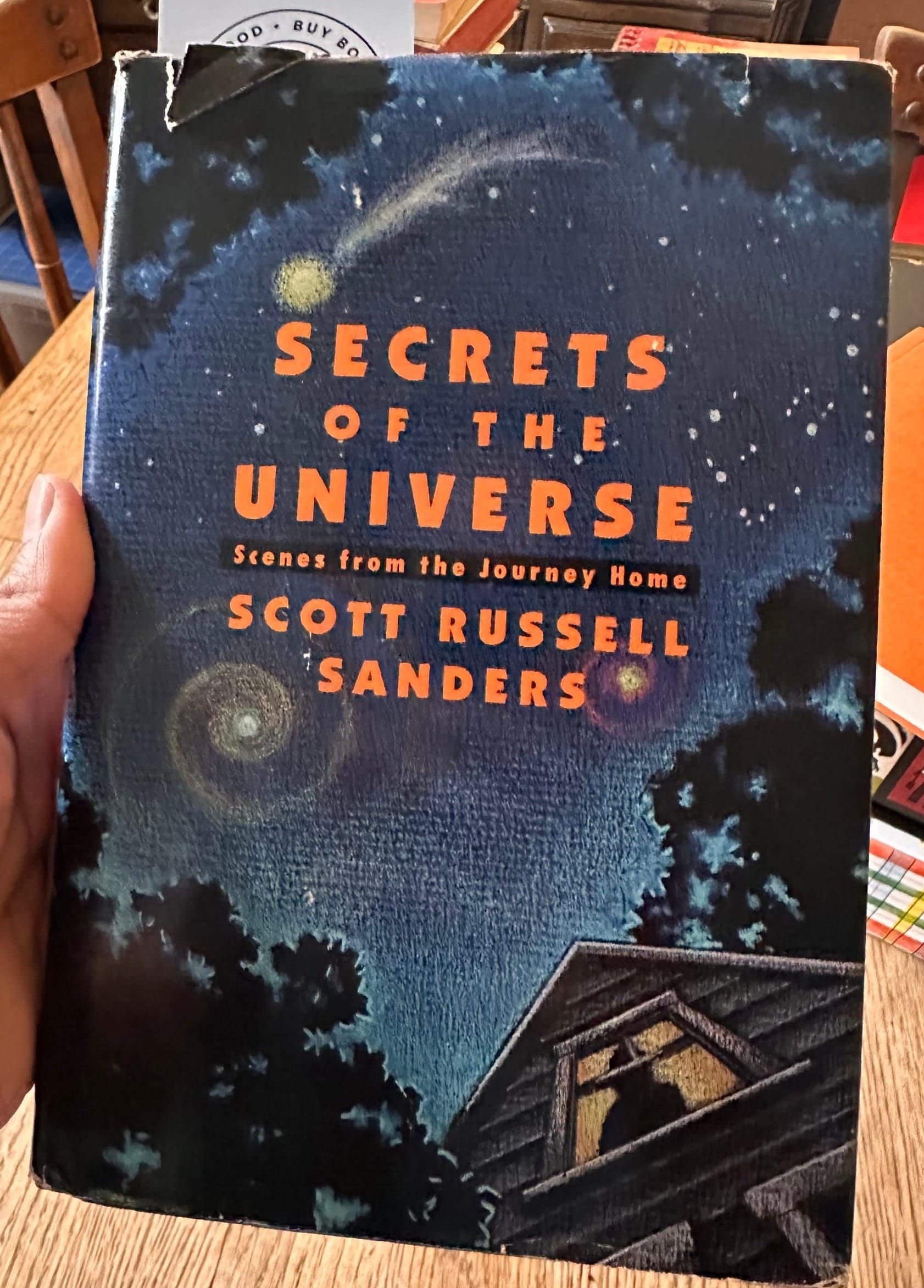
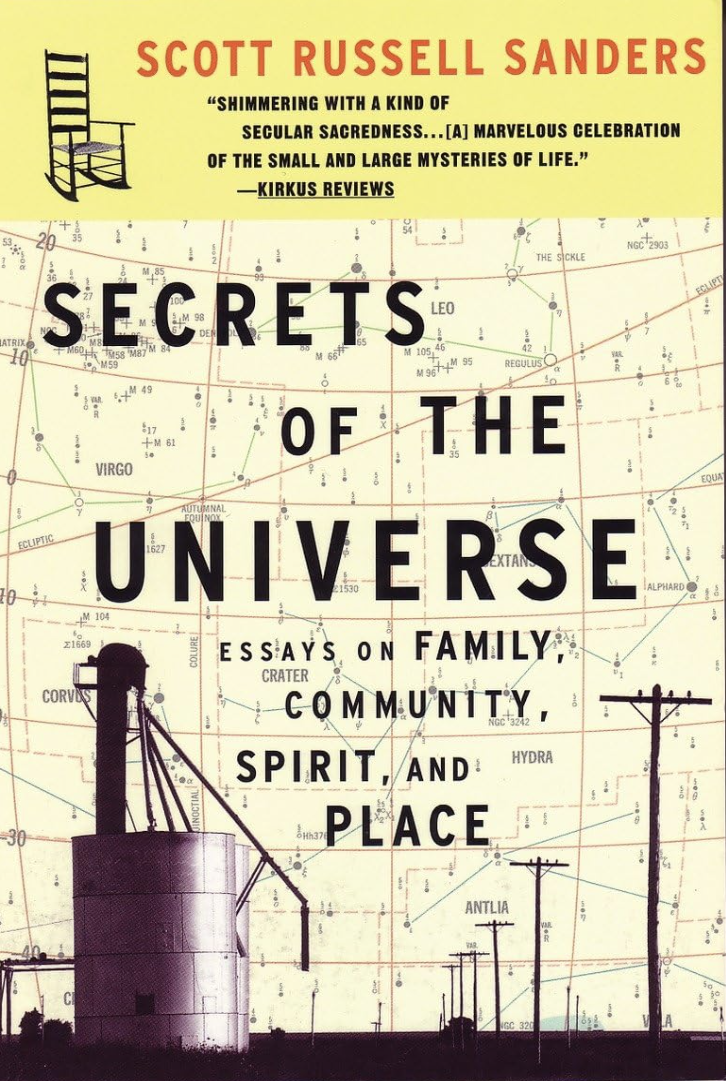
I searched far and wide online for the essay and couldn't find a PDF anywhere. I found out it was in a book so I bought it. But not just any version. I wanted the first one, the hardcover, because I noticed the paperback was framed a little differently. It was called Secrets of the Universe: Essays on Family, Community, Spirit, and Place, which is arguably more telling and up my alley, but I was intrigued by the original subtitle, "scenes from a journey home." And I think that's because homecoming is quite nebulous, an often inexplicable spiritual pull and complex never-ending process of reconciliation, renegotiating, and reorientation, as opposed to a set of extractable categories or neatly contained reasons to be somewhere as the latter subtitle implies.
The forever homebound journeywoman in me was more intrigued by the cover of this, with its shadowy figure in the upstairs bedroom window looking up at what stars would blanket her that night as opposed to this:
The essay I procured the book for did not disappoint. Here are my two favorite snippets from "Local Matters."
In ancient Japan, you realized you had wandered from your neighborhood when you could no longer hear the sacred drum. I know I've left my neighborhood when I can no longer hear the infernal dogs...
Distant dogs I can ignore, just as I ignore the faults of strangers and the leaks in other people's roofs. But these are my local dogs, whose voices therefore penetrate through windows and walls to skewer my brain.
My American upbringing offers three alternatives: kill the brutes, sue the owners, or move house...instead I shove in earplugs and grit my teeth...I put up with the ruckus because the dogs and their owners, along with ancient sewers and modern chuckholes, belong to my neighborhood, just as I do. I am convinced that you marry a place, if you truly want to live there, as you marry a spouse, for better or for worse. Having to listen to the bellow of dogs is a small tax to pay for the privilege of living in a community.
And this is the portion of the essay that made it into bell hooks' consciousness, and mine via her...
It is rare for any of us, by deliberate choice, to sit still and weave ourselves into a place, so that we know the wildflowers and rocks and politicians, so that we recognize faces wherever we turn, so that we feel a bond with everything in sight. The challenge, these days, is to be somewhere as opposed to nowhere, actually to belong to some particular place, invest oneself in it, draw strength and courage from it, to dwell not simply in a career or bank account, but in a community.
...which makes me wonder: what consumable aspects of community have we mistaken it for? Networks, amenities, power. How do we know when we have really let a place in?
With Belonging Comes Responsibility
Sanders goes further, gracefully elucidating the deep sense of responsibility that accompanies a sense of belonging when "place" isn't simply and selfishly thought of as yet another thing to consume.
Once you commit yourself to a place, you begin to share responsibility for what happens there. When PCBs leak into the water or dioxides into the air, it is your water and your air that is polluted. The parks, the schools, the hospitals, the government, all are yours to fret over. When kids knock at your door, requesting donations for the band or the debate team or the purchase of a limestone rhinoceros, you have to reach for your wallet. Entangle yourself in a place, and you become attached to your neighbors as kinfolk. When some of them pull up stakes and leave...you grieve. If a local woman is raped, a child goes hungry, a man is denied a job because of the shade of his skin, you are implicated. You must answer to the needs of a community, and if you neglect those needs, as I too often do, slipping back into the hammock of private life, you eat the sour bread of guilt.
No wonder our songs tell us we gotta keep travelin' on. Who needs to shoulder the weight of a community when our own skins weigh so heavily? The impulse to hit the road is not only a hunger for a new territory; it is often a flight from trouble. Daniel Boone is famous for having moved on whenever he could see the smoke from a neighbor's fire. Many of us move on to avoid cleaning up the ashes from the fires we ourselves have set.
A Call to Action on Place
It's a constant frustration of mine and an argument I get into with friends whenever I feel like they're "shopping a place" by declaring their preferences as opposed to seeing their relationship with place as a two-way commitment. It's like making a checklist on the ideal lover all the while resisting falling in love. Worse, it's colonization: arriving, plucking what suits you using the ladder of privilege, and leaving the rest.
I get that it takes some folks some time to find home, that not everybody is born into circumstances or communities that easily inspire such a feeling or commitment. I get that some people have to run up and away for a while before they have a sense of something to return to.
What I refuse to accept from people though is the permanent state of searching and flux. The refusal to put down roots. Fear of responsibility dressed sympathetically as loneliness. The complaining about a country or place and its current conditions, but not entering the arena.
It is not the job of a place to give you a sense of belonging and purpose, to wrap you up in its arms, and bestow amenities. What if our ancestors thought like that? The safety and comfort of place is something you have to contribute to building, for yourself and posterity, continuously. Maybe the bricks are gifted to you by the earth you stand on, but it's your duty to apply the glue.
I take this very seriously, and I find that I gravitate most toward people who do too, who at the very least are looking for a place to make a difference.
No spam, no sharing to third party. Only you and me.